

GLASS ENGINEERING / SAFETY
SAFETY
GLASS
Tempered and laminated glass solve different problems. Selection starts not with thickness, but with a question: what must the assembly do after impact or breakage?
PRINCIPLE
Tempered and laminated are not interchangeable.
Fully tempered glass has increased mechanical and thermal resistance and breaks into smaller fragments. In laminated glass, fragments typically remain bonded to the interlayer. For balustrades, overhead glazing and fall-risk zones, post-breakage behaviour often governs the specification.
Fully toughened safety glass
Glass bonded with interlayers
Pendulum impact classification
Laminated safety glass
The classes and examples below explain the logic of safety glazing. Final heat treatment, lamination and thickness depend on size, support conditions, fall risk and the function of the pane.
WHAT WE CHECK
Specification starts with the problem.
Safety glazing starts with a simple question: what must happen if the glass breaks? The answer is different for a door, a balustrade, overhead glazing or a large fixed pane.
Human impact
Doors, low-level windows, circulation zones and large panes near walkways are assessed for human impact and the required safety classification.
Fall protection
Where glazing protects a level difference, the damaged assembly may need to remain an effective barrier. Laminated construction can therefore be more important than tempering alone.
Overhead glazing
Canopies, roofs and rooflights require separate consideration of fragment retention, support conditions and design loads.
Heat soak and thermal risk
Heat-soak testing may be specified for critical tempered panes. It reduces, but does not completely eliminate, the risk of spontaneous breakage from critical inclusions.
PRACTICAL EXAMPLE
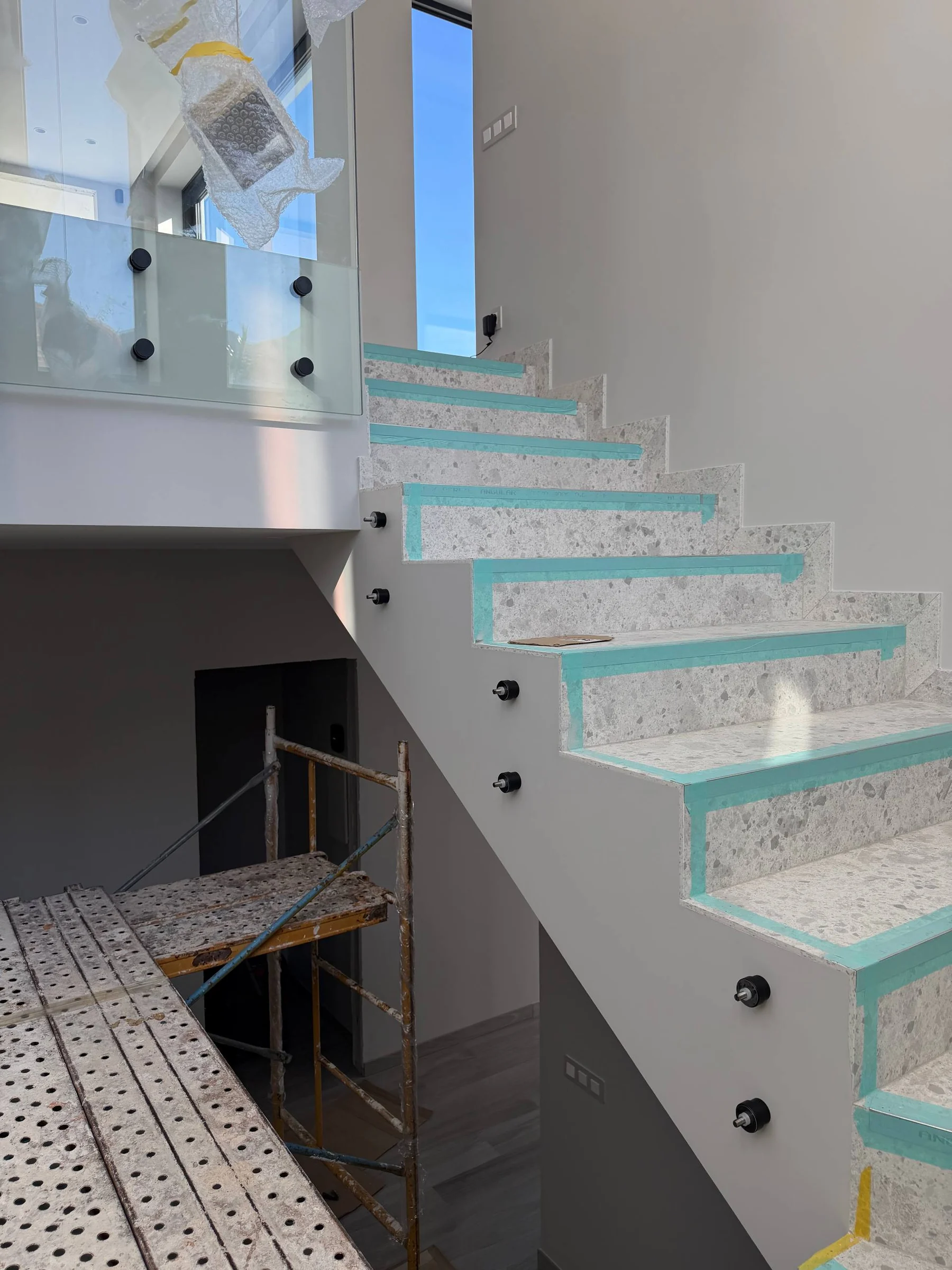
Balustrades: design the post-breakage scenario
A glass balustrade cannot be specified simply as “10+10 laminated”. Support geometry, height, span, interlayer type, edge conditions and design load all matter. Glass make-up should be the result of engineering, not the starting assumption.
TECHNICAL SOURCES
START A PROJECT
We check glass by function, not thickness alone.
Send drawings for a balustrade, door, canopy or large pane. We will identify the safety scenarios that need to be addressed in the glass specification.
Send project ↗